
Power Tools · 7 min read
Amp-hours, voltage and the truth about cordless battery runtime
Why a 5.0Ah pack does not last 2.5x longer than a 2.0Ah pack, how cold weather eats your charge, and the storage habits that double battery life.
By OUTROOM Field Desk · Updated
Key takeaways
- Voltage sets power; amp-hours set runtime. They are not interchangeable.
- Bigger packs run cooler, so they deliver more than their rated proportion of extra work.
- Below 0C a lithium pack can lose 20-30% of usable capacity until it warms up.
- Store at roughly half charge, indoors, and never leave a flat pack over the winter.
Battery marketing is deliberately confusing. Two numbers matter and both are printed on the pack: voltage, which sets how hard the tool can pull, and amp-hours, which sets how long it can pull for. Everything else - the cell chemistry, the fuel gauge, the badge colour - is secondary.
/ Voltage: the ceiling on power
A cordless motor can only produce as much mechanical power as the pack can feed it. 12V platforms suit interior work, cabinetry and electrical trades: light, compact, comfortable overhead. 18V is the working standard for anything structural. 36V and dual-18V systems exist for chainsaws and demolition, where the current draw would cook a smaller pack.
/ Amp-hours: the fuel tank, with a catch
A 5.0Ah pack holds 2.5x the charge of a 2.0Ah pack. In practice it often does more than 2.5x the work. Larger packs contain more cells sharing the same current, so each cell runs cooler, sags less under load, and delivers usable voltage further into the discharge curve. The tool bogs down later.
| Pack | Weight | Screws per charge | Best for |
|---|---|---|---|
| 2.0Ah | ~0.4 kg | ~250 | Overhead work, all-day carry |
| 4.0Ah | ~0.6 kg | ~550 | General site work |
| 5.0Ah | ~0.7 kg | ~720 | Decking, framing, long runs |
| 8.0Ah+ | ~1.0 kg | ~1,200 | Grinders, saws, high-draw tools |
/ Cold weather and what it really costs you
Lithium-ion chemistry slows as temperature drops. Internal resistance rises, voltage sags earlier, and the tool's low-voltage cutoff triggers while the pack still holds charge. At -5C expect roughly a quarter less usable work. The capacity is not lost - it returns when the pack warms - but planning for it stops the mid-afternoon surprise.
- Keep spare packs in the cab or an inside pocket, not the truck bed.
- Never charge a pack that is below freezing; let it reach room temperature first or you will plate lithium onto the anode permanently.
- A pack that is hot from heavy cutting also refuses to charge. Ten minutes in the shade, then onto the charger.
/ Storage habits that double service life
- 01Park at 40-60% chargeFull packs age faster; flat packs can drop below the protection threshold and refuse to wake up.
- 02Store between 10C and 25CA heated garage is fine. An uninsulated shed in August is not.
- 03Cycle idle packs quarterlyRun one down to about a third, charge back to half. Keeps the cells balanced and the gauge honest.
- 04Keep terminals clean and coveredA pack tossed loose in a bag with screws is a short circuit waiting to happen.
Tools that ship with more than one pack
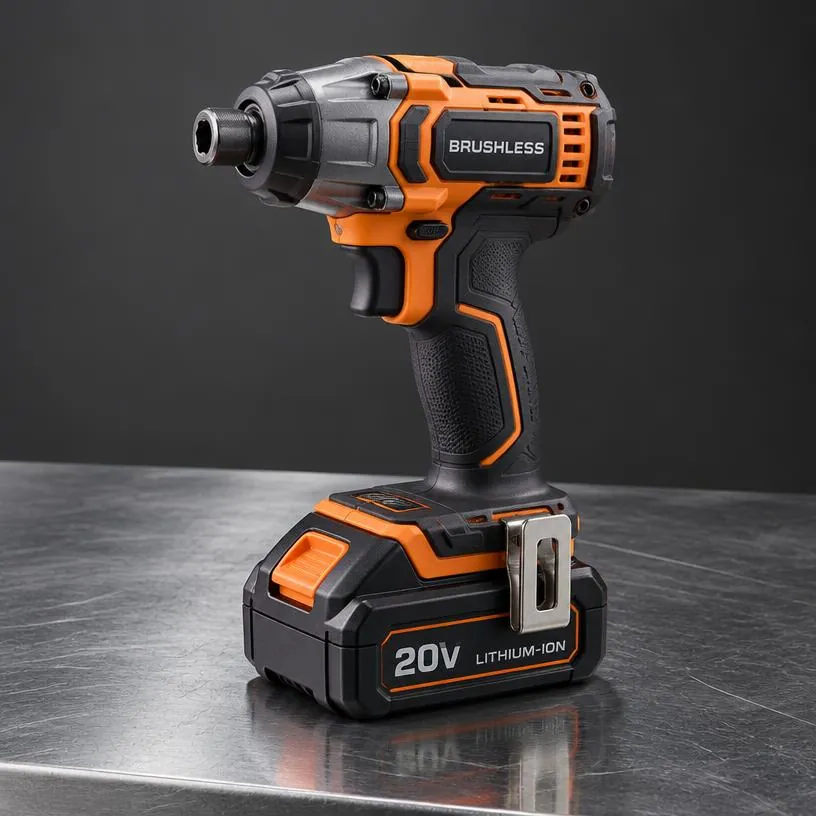 Save -25%12V Compact Drill With 2 BatteriesSave -32%18V Lithium Impact Driver KitBrushless Cordless Reciprocating Saw
/ Frequently asked
Do bigger batteries make a tool more powerful?+
Slightly, and only under heavy load. A larger pack sags less, so the motor sees higher voltage for longer. On light work you will not feel a difference.
Can I leave batteries on the charger?+
Modern chargers stop at full, but holding a pack at 100% shortens its calendar life. Take it off once charged if it will sit for weeks.
How long should a pack last?+
Roughly 500-1,000 full charge cycles, or three to five years of regular trade use, before noticeable capacity loss.