
Hand Tools · 7 min read
Rust never sleeps: a maintenance routine that keeps steel tools working
Condensation, salt and sweat kill more tools than use does. A ten-minute weekly routine, the right oils, and how to bring a seized tool back.
By OUTROOM Field Desk · Updated
Key takeaways
- Rust needs moisture, oxygen and time - the routine only has to remove one of them.
- Hand sweat is mildly acidic and salty; wiping tools down after use matters more than any coating.
- Vapour-phase corrosion inhibitor strips protect a closed toolbox for up to a year.
- Light surface rust comes off with oil and fine abrasive. Pitting is permanent.
A forged wrench outlives the person who buys it, unless it spends a winter in an unheated shed. Steel does not fail from work - it fails from the film of condensation that forms every time a cold garage warms up in the morning sun.
/ The ten-minute weekly routine
- 01Wipe down while still warmA dry rag removes sweat salts and moisture before they settle into the surface.
- 02Blow out the mechanismsRatchets, pliers pivots and pruner springs collect grit that holds water against the steel.
- 03Oil a thin filmA few drops of light machine oil on a cloth, wiped over the whole tool. More oil attracts more dust, not more protection.
- 04Check the edgesChisels, axes and pruners rust first at the thin, freshly exposed steel of a cutting edge.
- 05Close the box with a VCI stripVapour-phase inhibitors release a protective molecular layer inside a closed drawer or case.
/ What to put on the steel
| Product | Good for | Watch out for |
|---|---|---|
| Light machine oil | General protection, pivots | Attracts dust if applied heavily |
| Penetrating spray | Freeing seized parts | Evaporates - not a protective coating |
| Paste wax | Saw plates, plane soles, cast surfaces | Needs buffing; slippery on handles |
| Camellia / mineral oil | Blades that touch food or skin | Lower durability outdoors |
| VCI paper and strips | Closed toolboxes, winter storage | Only works in an enclosed space |
/ Bringing a rusted tool back
- 01SoakPenetrating oil on the whole tool, overnight, in a shallow tray.
- 02Abrade gentlyFine bronze wool or 400-grit wet-and-dry with oil as the lubricant. Never a power wire wheel on a precision surface.
- 03Neutralise deep rustA citric acid or chelating bath lifts rust from pitting without attacking sound steel. Rinse and dry immediately - bare steel flash-rusts within minutes.
- 04Protect straight awayOil or wax the moment it is dry. A cleaned tool is more vulnerable than a dirty one.
Pitting, once formed, does not come back out. On a wrench it is cosmetic. On a cutting edge or a machined mating face it changes how the tool works, and that tool moves to the rough-work drawer.
You are not fighting rust. You are managing humidity, one wipe at a time.
- Workshop maintenance notes
Hand tools worth maintaining
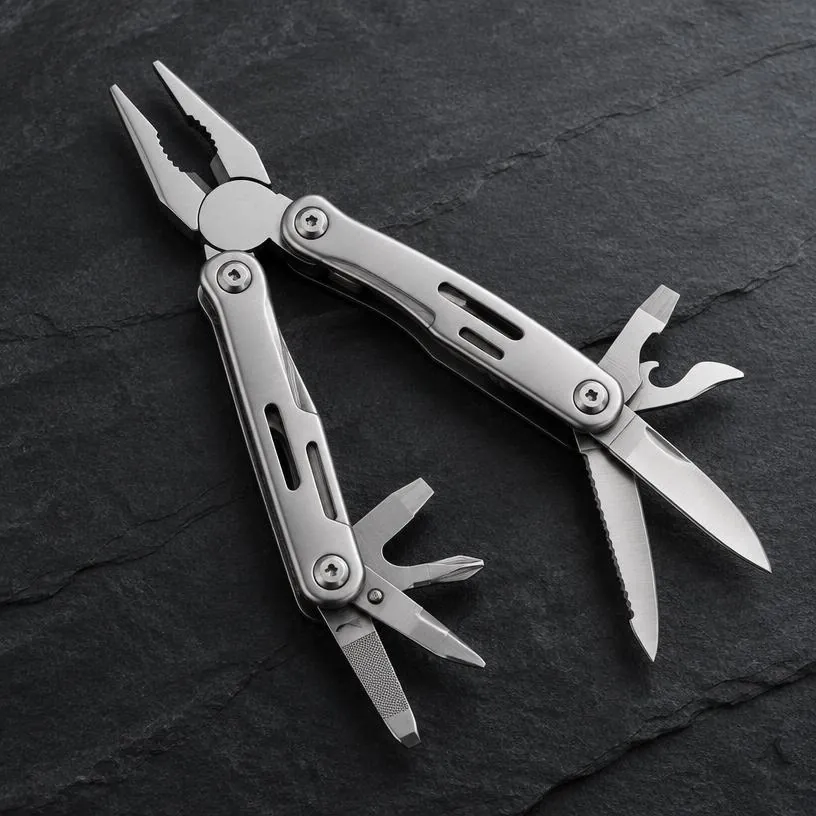 46-Piece Ratchet & Socket SetSave -29%Folding Stainless Steel Multi-toolSave -21%Modular Tool Box With Double Lock
/ Frequently asked
Is WD-40 a rust preventative?+
It displaces water and frees stuck parts, but it evaporates and leaves little lasting film. Follow it with machine oil or wax for real protection.
How do I store tools in a damp garage?+
A closed box with VCI strips, raised off the concrete floor, plus a low-wattage dehumidifier or heater rod in winter. Open shelving in a damp space is the worst case.
Does stainless steel rust?+
It resists rust but is not immune. Salt, chlorine and contact with ordinary steel filings all cause surface staining on stainless tools.